
Life is an endless sequence of choices, yet we have a strange habit of pretending we’ve lost the keys to the car. We love to construct narratives that strip away our freedom, making it feel as though we are just cogs in "the machine" or prisoners to a system we can't control. To be clear: this isn't a political manifesto or a call to "rage against the machine" even if the soundtrack would be amazing. Whether we’re venting to a friend or whispering it to ourselves in the mirror, we use language that turns us into victims of our own schedules. In fact, most of us probably signed away our power three times yesterday before the coffee even got cold:
“I can’t get to that project today.”
“I’m just too busy to exercise.”
“I’d love to help, but I just don’t have the time.”
On the surface, these sound like reasonable, objective statements of fact. You look at your calendar, see a wall of back-to-back meetings, and conclude that you are "too busy." Or you look at the monthly schedule of family activities and wonder when you’ll have any time to do anything for yourself.
But if we’re being honest, the kind of honesty I talk about in The Excuse Index, these phrases are actually a form of camouflage. They are designed to “protect us” from truly owning the problem and creating a solution.
The Problem with "I Can't"
When you say "I can’t," you are positioning yourself as a victim of your circumstances. You’re telling your brain and everyone around you that you have no ability to change anything. It implies there is an external force (the clock, your boss, the universe) preventing you from acting.
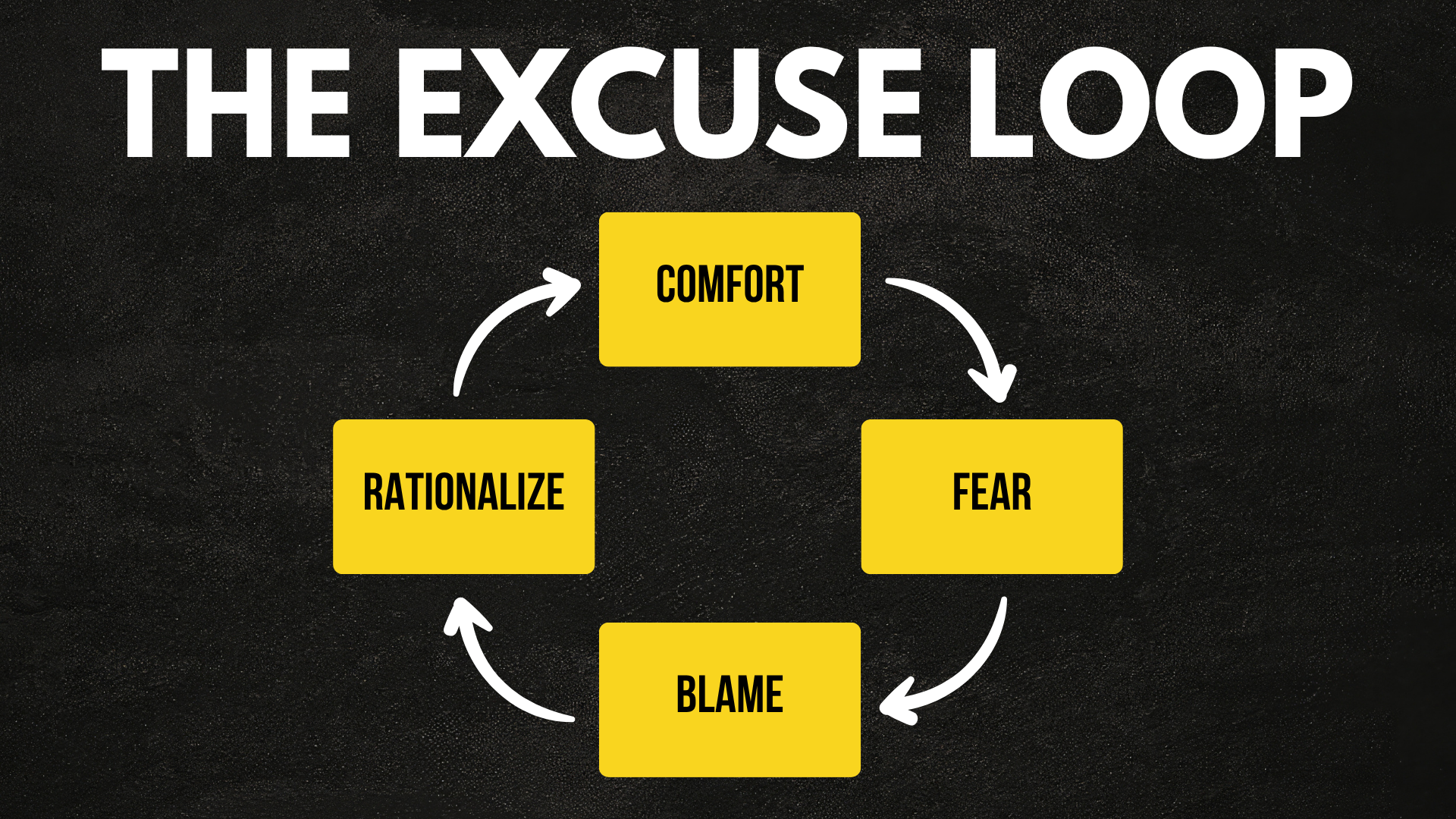
But "I can't" is rarely true. Unless you are physically restrained or facing a literal law of physics, "can't" is usually a lie. And when we lie to ourselves about our ability to make change, we continue an endless cycle called the Excuse Loop. We start to believe that our lives are happening to us, rather than being built by us.
The Power of "I Am Choosing Not To"
What happens if you swap those defensive phrases for something more transparent? Try saying this out loud: "I am choosing not to prioritize that right now."
It feels different, doesn’t it? It’s heavier, a bit more direct, and it forces you to look at the trade-off you’re actually making.
Old way: "I’m too busy to work towards my big dream."
New way: "I am choosing to prioritize Netflix/social media/video games over spending a few minutes brainstorming the new thing."
Old way: "I can't make a career change right now."
New way: "I am choosing to stay in my current comfort zone because I’m not ready to handle the potential for failure."
Why This Shift Matters
When you move to the language of Choice, two things happen immediately:
The Excuse Evaporates: It’s hard to stay in a procrastination spiral when you are forced to admit that you are making a conscious decision to avoid the work.
Your Power Returns: If you have the power to choose not to do something, you inherently have the power to choose to do it. Ownership is the only path to transformation.
The Challenge
This week, I want you to perform an audit of the words you use. Every time you’re about to say "I'm too busy" or "I can't," catch yourself. Pause and rephrase it as a choice. (If you need some help getting started, check out my free Excuse Audit.)
You don't have to say it out loud to your boss (though sometimes that level of radical transparency is exactly what a team needs), but you must say it to yourself.
The person you used to be might have let the calendar call the shots, but the new you is ready take full ownership of the next step. When you stop hiding behind "can't" and start owning your "no," your "yes" finally starts to mean something again.
Which choice are you making today?